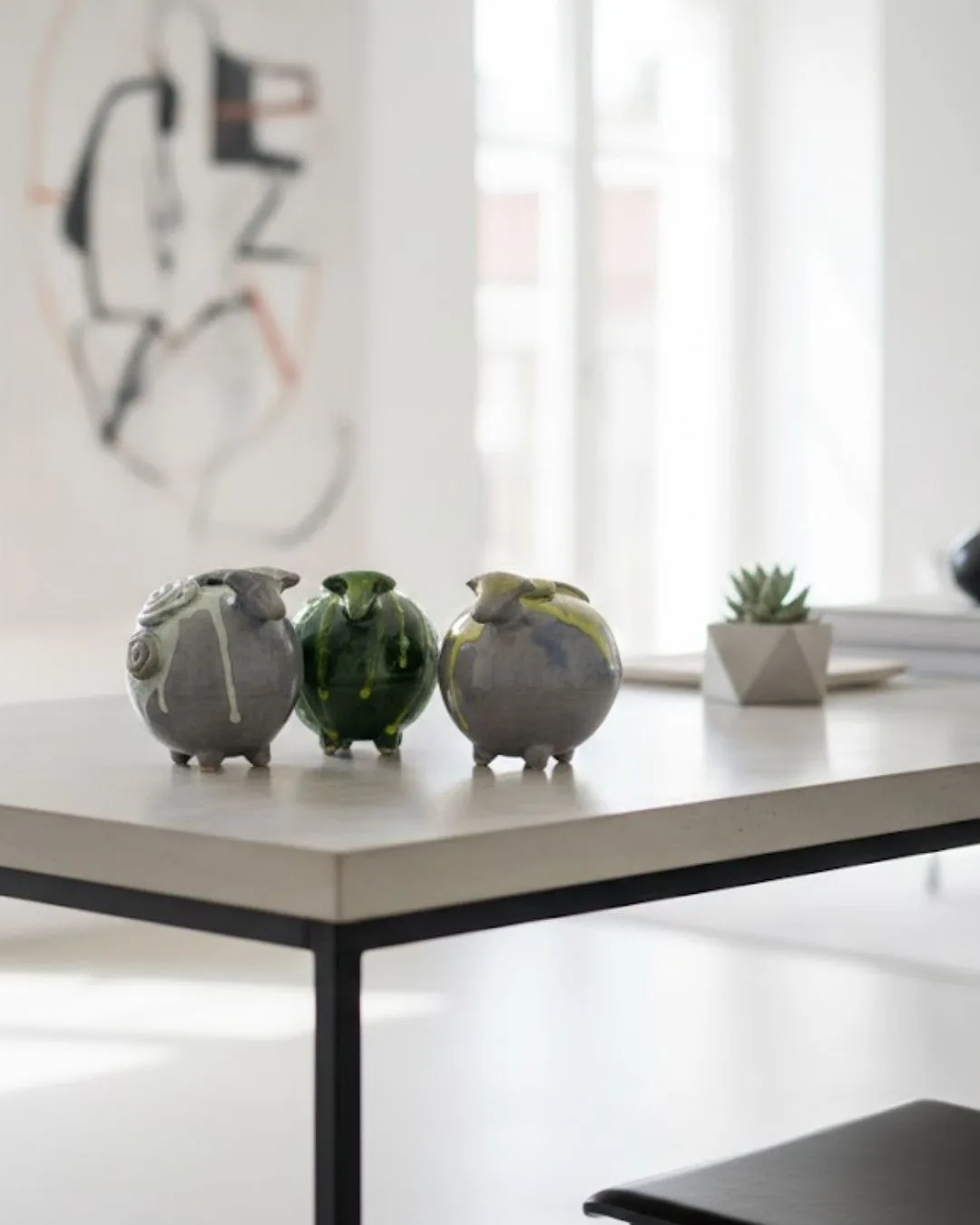
How to recognise authentic Tunisian handmade ceramics
Clay, glaze, brushwork and small irregularities: simple pointers to tell a handmade ceramic from an industrial piece.
Why the question arises
Today you can find plates, bowls and dishes that imitate the handmade look very well. A blue pattern, an uneven rim drawn by a mould, and you think you are holding a handmade piece. To know what you are buying, a few simple checks are enough. They need no technical knowledge, only a little attention.
The clay and where it comes from
Tunisia has a long pottery tradition, and Nabeul is one of its best-known towns. Clay has been worked there for a long time, and the material gives the piece its weight, its colour at the break and its feel. When a maker talks about Nabeul clay, they can tell you where they work it and how they prepare it.
A terracotta piece has a certain density in the hand. Turn it over: the underside often shows the clay, which lets you see its natural colour, often ochre or pinkish. A perfectly smooth, white underside with a regular mark suggests industrial manufacture instead.
The visible touch
A handmade ceramic carries the trace of the hand that shaped it. Look at the shape: the rim may be very slightly oval, the thickness varies a little, the handles are not perfectly symmetrical. These small differences are normal, and they are what lets you recognise a thrown or hand-built object.
Be careful, though, not to confuse irregularity with a defect. A handmade piece can be imperfect without being badly made. It should stay stable on the table, with no cracks in the glaze and no edges that catch the mouth.
The glaze and the decoration
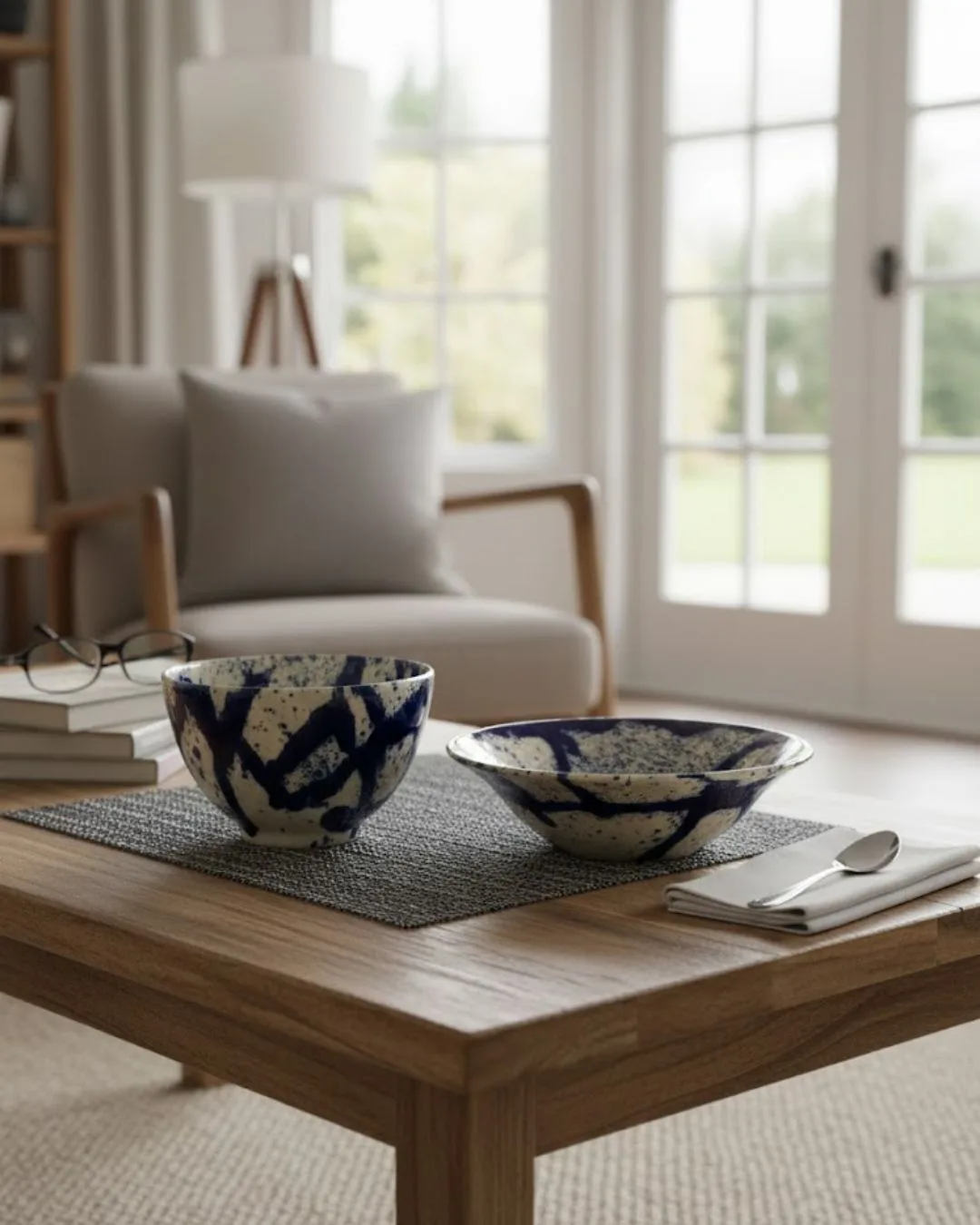
The decoration is the best clue. When patterns are painted with a brush, you can see slight variations: a line a little thicker here, a drop of more concentrated colour there. In the Les Souks catalogue, for example, you will find hand-glazed ceramics with touches of cobalt blue applied by brush. Each piece keeps its own nuances, and two plates from the same series never look exactly alike.
By contrast, an identical decoration from one piece to the next, with very sharp outlines and no variation, is often printed or applied as a transfer. Run your finger over the pattern: hand painting has a slight relief, whereas a print stays perfectly flat.
Questions to ask the maker
The most reliable way is still to ask. An artisan will gladly answer, and the answers say a lot.
- Where and how was the piece made?
- Which clay was used, and where does it come from?
- Are the glaze and the decoration applied by hand?
- Is the piece dishwasher, oven or microwave safe?
- Can it be ordered in several copies, with slight differences?
Someone who really makes their own pieces can answer precisely and directly. If the answers stay vague, be wary.
Everyday use
A handmade ceramic is meant to be lived with. It can hold food, but always read the maker's instructions: some decorative pieces are not made for the oven or for prolonged contact with food. Wash them gently, avoid sudden temperature changes and store them without stacking when the glazes are fragile.
Over time, the glaze may develop a slight patina. This is a sign of life rather than a defect, and many people appreciate this change.
Price, one guide among others
A piece that is thrown, dried, fired, glazed and then fired a second time represents hours of work, and the price should reflect that time. An extremely low price for a very detailed decoration should make you curious. Without making it an absolute rule, compare what you see with the information given by the seller.
Where to buy with confidence
On Les Souks, each maker presents their work, and you can discover the workshops and their worlds in the section on makers. For tableware, ceramics and serving pieces, the category Tableware brings together the pieces made for the table. If a question remains, the team advises you by WhatsApp before you buy, and delivery takes 24 to 72 hours with cash on delivery.
Start by browsing Tableware, pick out two or three pieces, then read their maker's page before choosing.